 |
| Source:www.pewtrusts.org |
My research question to help me study the economic principle is How are drug companies persuading doctors/physicians to use their drug? Is it ethical?
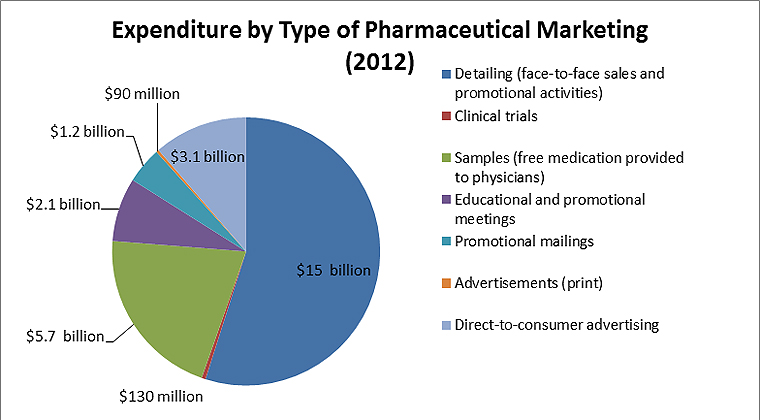
The article published in the Pew Charitable Trusts titled “Persuading the Prescribers: Pharmaceutical Industry Marketing and Its Influence on Physicians and Patients” demonstrates this economic principle because it shows how pharmaceutical companies are able to market and persuade physicians to use their drug.
First, In a chart from the Cegedim Strategic Data titled “Expenditure by Type of Pharmaceutical Marketing”. Pharmaceutical companies spend $15 billion dollars for direct marketing. This could include pharmaceutical representatives going to visit doctors to pitch their drug and hand out free samples. Pharmaceutical companies also promote these drugs by inviting doctors to promotional meetings. They would promote their specific drugs to these doctors. In an analysis by ProPublica, an investigative news organization, 8 pharmaceutical companies have used $200 million in speaker payments to physicians. I believe that advertising to doctors is more ethical than advertising to consumers. When these pharmaceutical companies advertise to consumers they have no knowledge behind the drug and believe it is the right kind of drug for them based on an “advertisement”. Advertising to physicians is better because these physicians are knowledgeable to know whether that drug with be effective for their patient or not.
Second, Pharmaceutical companies use Indirect marketing to appeal to promote their drug to physicians. These companies use Medical Education as a way of advertising to physicians. In 2011, pharmaceutical and medical industries spend roughly $752 million-2.35 billion dollars for continuing medical education. This might not seem like it is marketing, but in 2007 Senate Finance Committee has actually found drug companies to use educational grants to market their product for years.
Third, Organizations that have received grants from a pharmaceutical manufacturer would endorse or favor those companies’ products over other company drugs. Industries have also used journal and web advertisement to appeal to physicians. These ads are in medical magazines/journals and is one of the most important form of advertising for pharmaceutical companies. A recent study found that journal advertising had the highest return on investment compared to other promotional strategies, with returns from $2.22 to $6.86 per advertising dollar spent between 1995-1999.

No comments:
Post a Comment